What Year Ford Focus Parts Are Interchangeable | Guide
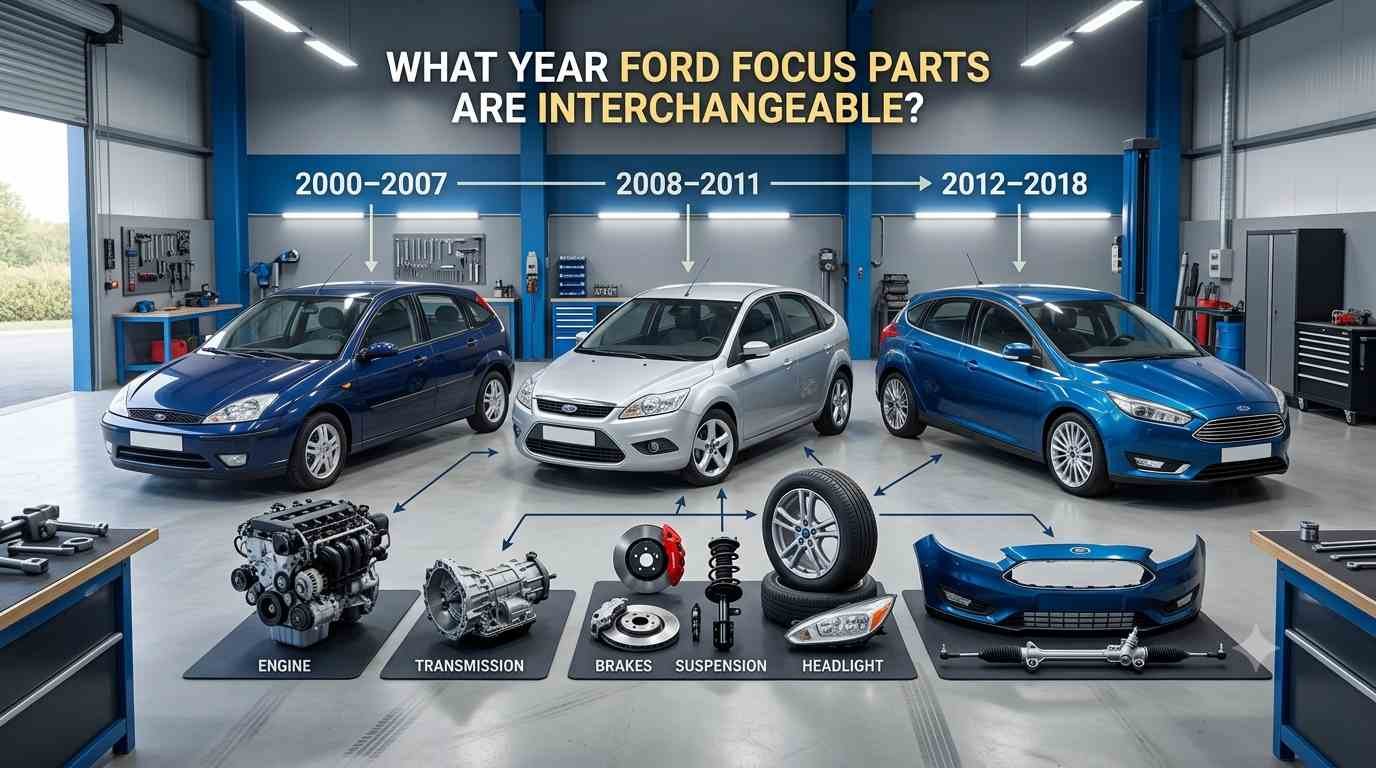
Ford Focus parts are generally interchangeable within the same generation. Most 2000–2007, 2008–2011, and 2012–2018 models share many mechanical parts. However, body panels, headlights, grilles, dashboards, and some electronic components may differ after design updates, so always confirm the VIN and OEM part number before buying.
In this guide, you will learn which Ford Focus years share the most interchangeable parts, which components can usually be swapped, and which ones need extra attention before you buy.
Understanding Ford Focus Generations
The easiest way to understand parts compatibility is by looking at the different generations of the Ford Focus. Most interchangeable parts are shared within the same generation because the vehicles use similar designs, dimensions, and mechanical systems.
First Generation (2000–2007)
The first-generation Ford Focus introduced a completely new platform. During these years, many mechanical parts such as suspension components, brakes, steering parts, and engine accessories remained very similar.
In 2005, Ford refreshed the exterior styling, so some body panels and lighting parts changed. Mechanical components often remain compatible between earlier and later models, but exterior parts should always be checked carefully before making a purchase.
Second Generation (2008–2011)
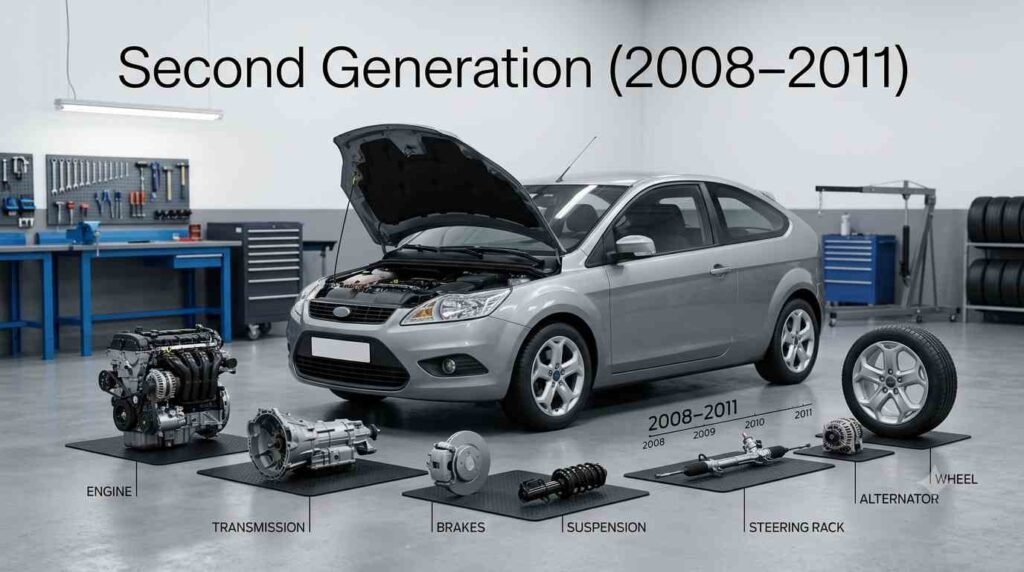
The second-generation Focus received another redesign with updated styling and improved technology. Most parts from these model years interchange well with one another because the platform stayed largely the same throughout the generation.
Common replacement items such as brake parts, suspension components, engine accessories, wheels, and many interior pieces are often direct replacements between these years.
Third Generation (2012–2018)
The third generation brought significant improvements to the Ford Focus. It introduced new engines, updated electronics, and modern safety features. Many parts interchange between these years, but there is one important exception.
Ford refreshed the vehicle in 2015. This facelift changed several exterior components, especially at the front of the vehicle. While many mechanical parts remained compatible, items such as the front bumper, hood, grille, headlights, and front fenders often require matching the correct model years.
Why Generations Matter
Vehicle generations are more important than the model year alone. Two cars built only one year apart may use completely different parts if one belongs to a new generation.
Before buying any replacement, always confirm the generation, engine type, transmission, trim level, and original part number whenever possible.
Ford Focus Interchangeable Years at a Glance
The table below provides a general overview of Ford Focus parts compatibility. It is a helpful starting point, but you should still verify the exact part before purchasing.
| Model Years | Generation | General Compatibility |
| 2000–2004 | First Generation | Most mechanical and interior parts interchange. |
| 2005–2007 | First Generation (Facelift) | Many mechanical parts interchange, but some body parts changed. |
| 2008–2011 | Second Generation | High compatibility within these years. |
| 2012–2014 | Third Generation | Most parts interchange directly. |
| 2015–2018 | Third Generation (Facelift) | Mechanical parts often fit, but many front-end body parts differ. |
This chart gives a general idea of compatibility, but every replacement should still be confirmed using the vehicle identification number (VIN), engine size, transmission type, and OEM part number.
Engine Parts That Interchange Between Ford Focus Years
Many engine-related parts can be shared between Ford Focus models that use the same engine family. This makes engine repairs easier and helps owners find affordable replacement parts.
Engine Blocks
Engine blocks usually interchange only when the vehicles have the same engine size and engine code. Even if two engines look similar, small design differences can prevent a direct swap.
Cylinder Heads
Cylinder heads often fit multiple model years within the same engine family. However, changes to sensors, emissions equipment, or valve designs may require additional parts during installation.
Intake Manifolds
Many intake manifolds can be exchanged between similar engines, but later models may include updated sensors or different mounting points. Always compare the original part before replacing it.
Fuel Injectors
Fuel injectors may look identical but often have different flow rates or electrical connectors. Matching the original specifications helps maintain proper engine performance.
Alternators
Alternators frequently interchange between nearby model years that share the same engine. Before buying one, compare the mounting brackets, electrical plugs, and output rating.
Starter Motors
Starter motors are commonly interchangeable within the same generation when the engine and transmission match. A quick comparison of bolt locations and wiring connectors can prevent installation problems.
Cooling Components
Radiators, water pumps, cooling fans, and thermostats may fit several model years, especially when the engine remains unchanged. Vehicles with different engine sizes often require different cooling systems.
Belts and Pulleys
Drive belts, tensioners, and pulleys usually interchange between models equipped with the same engine. Since these parts wear over time, many owners replace them together during maintenance.
Transmission Parts Compatibility by Model Year
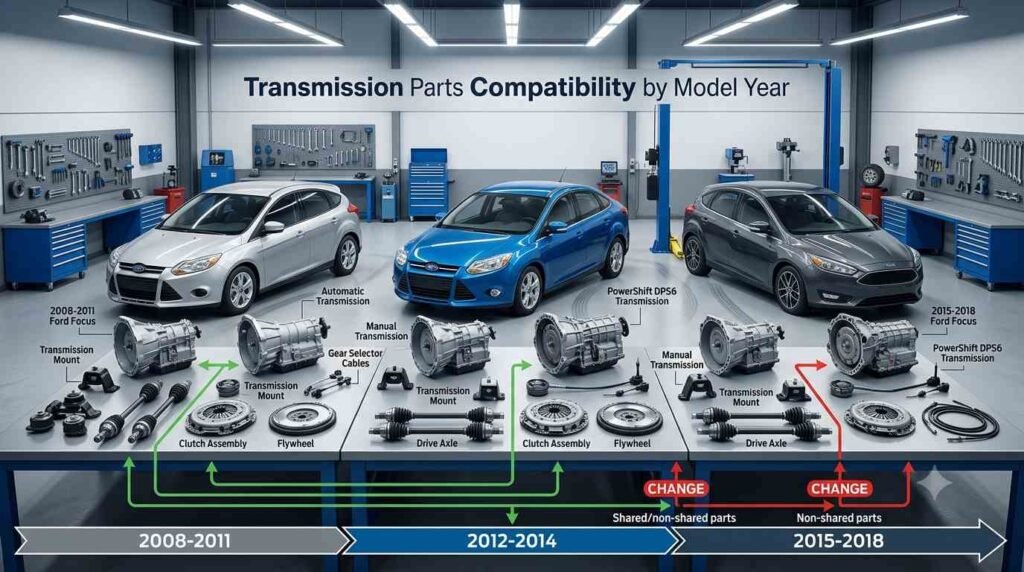
Transmission compatibility depends on more than the model year. The type of transmission plays a major role in determining whether parts can be exchanged.
Manual Transmissions
Manual transmission components often interchange between models that use the same gearbox. Items such as shift cables, mounts, clutch components, and flywheels usually share similar designs within the same generation.
Automatic Transmissions
Automatic transmission parts require closer inspection because different years may use different internal components or electronic controls. Matching the transmission code is one of the safest ways to confirm compatibility.
PowerShift DPS6 Transmission
Some third-generation Ford Focus models came with the DPS6 PowerShift transmission. Parts for this transmission should only be replaced with compatible components designed for the same transmission system. Using parts from a different transmission may cause shifting problems or warning lights.
Transmission Mounts and Axles
Transmission mounts and drive axles often interchange between similar models with the same engine and transmission combination. However, different trim levels or wheel sizes can sometimes affect axle compatibility.
Suspension and Steering Parts That Can Be Swapped
Suspension and steering components are among the most commonly replaced Ford Focus parts. Many of these items are interchangeable within the same generation, making them easier to find in the used parts market.
Front struts, rear shocks, control arms, ball joints, tie rod ends, steering racks, and wheel bearings often fit several model years when the suspension design remains unchanged. These parts usually share the same mounting points, allowing for straightforward replacement.
Even so, sport trims and performance models may use different suspension settings. Before purchasing replacement parts, compare the original specifications to ensure the correct fit.
Brake System Parts Interchange Guide
Brake components are another area where many Ford Focus models share compatible parts. Brake pads, brake rotors, brake calipers, and master cylinders often interchange between nearby model years that use the same braking system.
Some higher trim levels include larger brake packages, which means the rotor size and caliper design may differ from standard models. Anti-lock braking system (ABS) components also vary depending on the vehicle’s equipment level.
For the safest repair, always compare the rotor diameter, brake caliper design, and OEM part number before installing replacement brake parts.
Exterior Body Parts Compatibility
Exterior body panels are some of the most difficult Ford Focus parts to interchange because even a small design update can affect the fit. Parts such as the front bumper, hood, grille, headlights, front fenders, mirrors, doors, tail lights, and trunk lid often depend on the exact model year and body style.
The biggest change came with the 2015 facelift. Ford redesigned the front end, giving the vehicle a new grille, headlights, hood, bumper, and fenders. Because of these updates, many front-end parts from earlier third-generation models do not fit later versions without additional modifications.
Rear body components generally remained more consistent, but they should still be checked carefully before purchase. Even when a part appears identical, mounting clips, bolt locations, and trim details may be different.
When buying used body panels, always compare photos, check the original part number, and confirm the donor vehicle’s model year. Spending a few extra minutes verifying compatibility can save both time and money while helping you avoid costly installation problems.
Interior Parts That Interchange
Many interior parts can be swapped between Ford Focus models that belong to the same generation. This is good news for owners who want to repair a worn interior or replace damaged components without spending too much money. Used interior parts are often available in excellent condition and cost much less than brand-new replacements.
Seats are among the most commonly replaced interior parts. Front and rear seats usually fit other models from the same generation, although seat materials, colors, and power adjustment features may differ. If your vehicle has heated seats or built-in airbags, make sure the replacement seat includes the same equipment.
The dashboard, center console, door panels, steering wheel, and glove box are also interchangeable in many cases. However, trim levels can affect the appearance and features. Some higher trims include extra storage compartments, different finishes, or additional controls that may not be found in base models.
The instrument cluster, radio, touchscreen, and climate control system deserve extra attention. These components often depend on the vehicle’s wiring and software. Even if the part fits physically, it may require programming before it works correctly. Always compare the part number and electrical connectors before buying electronic interior parts.
Wheels and Tire Compatibility
Wheel compatibility depends on more than just the size of the wheel. The bolt pattern, wheel offset, center bore, and tire size all need to match the vehicle’s specifications.
Many Ford Focus models share the same bolt pattern within a generation, making it possible to swap factory wheels between similar years. However, wheel diameter and offset can vary depending on the trim level. A wheel that fits one model may rub against the suspension or body if the offset is different.
When replacing wheels, check the recommended tire size as well. Using the correct tire helps maintain proper handling, braking, and speedometer accuracy. If you are buying used wheels, inspect them carefully for bends, cracks, or other damage before installation.
Electrical Components That Require Extra Attention
Electrical parts are usually the hardest components to interchange because modern vehicles rely on many electronic control systems. While some electrical parts can be swapped, others require programming or may not work correctly if they come from a different model year.
The engine control module (ECU), body control module (BCM), wiring harnesses, sensors, and airbags should always be matched carefully. Even small differences in software or wiring can prevent the vehicle from operating properly.
If you are replacing an electronic component, compare the OEM part number instead of relying only on the model year. In many cases, using the correct part number is the safest way to ensure compatibility.
How to Check Whether a Ford Focus Part Will Fit
Before purchasing any replacement part, take a few simple steps to confirm that it is compatible with your vehicle. Start by checking the vehicle identification number (VIN), which provides detailed information about the model, engine, and factory equipment.
Next, compare the engine size and transmission type because many mechanical parts depend on these specifications. Matching the OEM part number is also one of the most reliable ways to confirm compatibility.
If you are buying from a salvage yard or online seller, ask for clear photos of the part and confirm the donor vehicle’s model year. Spending a little extra time checking compatibility can prevent costly mistakes and unnecessary returns.
Common Ford Focus Parts That Do Not Interchange
Although many Ford Focus parts can be shared between different years, some components usually require an exact match. Front bumpers, hoods, headlights, grilles, and front fenders often change after a facelift, making them poor candidates for swapping across different design updates.
Electronic modules, wiring harnesses, airbags, and certain dashboard components also have limited compatibility because they rely on specific software and electrical systems. Using the wrong electronic part may lead to warning lights or system failures.
When replacing these components, always verify the original part number and avoid assuming that similar-looking parts will fit correctly.
Tips to Avoid Buying the Wrong Ford Focus Parts
Buying the correct replacement part becomes much easier when you follow a few basic steps. Always verify the VIN, compare the OEM part number, and confirm the engine and transmission before placing an order.
If you are buying used parts, ask the seller about the donor vehicle’s model year, trim level, and mileage. Inspect photos carefully and make sure all mounting points and electrical connectors match your original part.
It is also helpful to purchase from sellers who offer a return policy. This gives you peace of mind in case the part does not fit as expected.
FAQs
What years of Ford Focus are interchangeable?
Ford Focus parts are usually interchangeable within the same generation. For example, many parts fit between 2008–2011 or 2012–2014 models. Always check the engine, trim level, and OEM part number before buying a replacement.
What year Ford Focus parts are interchangeable?
Most Ford Focus parts interchange within the same generation. Mechanical components usually have wider compatibility than body panels and electronic parts.
Do 2012 and 2018 Ford Focus parts fit each other?
Some mechanical parts may fit, but many front-end body parts are different because the vehicle received a major exterior update in 2015.
Are 2008 and 2011 Ford Focus parts interchangeable?
Yes. These model years belong to the same generation, so many engine, suspension, brake, and interior parts are direct replacements.
What year to stay away from Ford Focus?
Many buyers avoid some 2012–2016 Ford Focus models because of reported PowerShift automatic transmission problems. If you are considering one of these years, check the vehicle’s repair history and have it inspected before purchasing.
What years have interchangeable parts?
Most interchangeable parts are shared within the same generation. Mechanical parts often have better compatibility than body panels or electronic components, which may change after a redesign or facelift.
What should I replace my Ford Focus with?
If you want a car similar to the Ford Focus, you can consider the Honda Civic, Toyota Corolla, Mazda3, Hyundai Elantra, or Volkswagen Golf. These models offer similar size, comfort, and everyday driving experience.
What’s the best year for a used Ford Focus?
Many drivers consider the 2010, 2011, 2017, and 2018 Ford Focus among the better used models. These years are generally known for good reliability when they have been properly maintained.
What car is equivalent to a Ford Focus?
The Ford Focus competes with compact cars like the Honda Civic, Toyota Corolla, Mazda3, Hyundai Elantra, Nissan Sentra, and Volkswagen Golf. They all offer similar seating, fuel economy, and practical features for daily driving.
Conclusion
Finding out what year Ford Focus parts are interchangeable can help you save money and avoid unnecessary repair problems. Many mechanical, suspension, brake, and interior components are shared within the same generation, making used replacement parts a practical choice. However, body panels, electrical systems, and major electronic components often require a closer match because of design updates and changing technology.
Before buying any replacement part, always compare the VIN, engine size, transmission type, trim level, and OEM part number. Taking these simple steps will help you choose parts that fit correctly, perform as expected, and keep your Ford Focus running smoothly for years to come.